
Can Pavers Handle Heavy Rain? What Matters Most
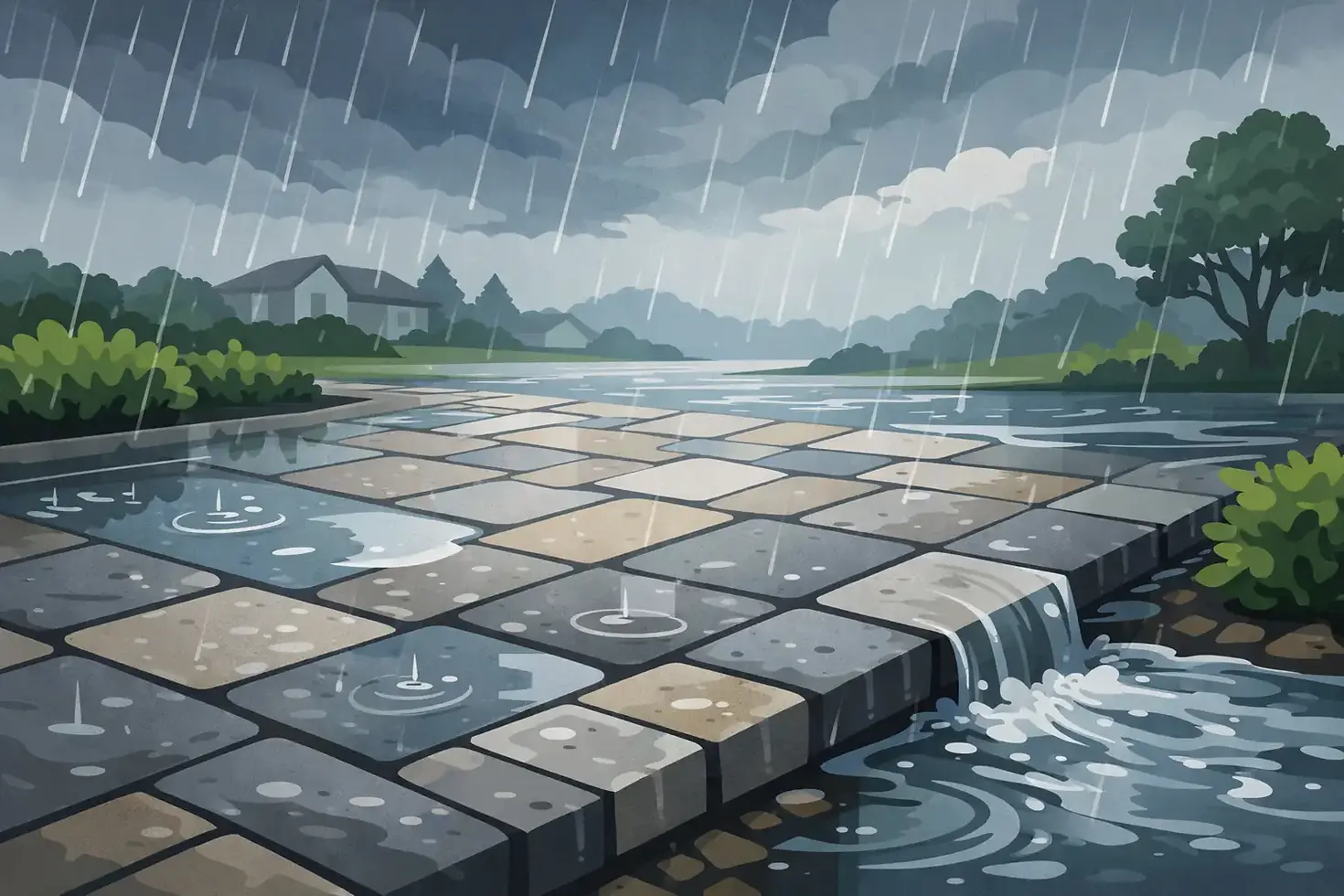
A hard rain should not end your plans for a beautiful patio, walkway, or outdoor retreat. So, can pavers handle heavy rain? Yes, when the surface is designed and installed as a complete system. The pavers you see on top matter, but the real protection from standing water, shifting, and washout happens below the surface.
For homeowners in Kelso, Cowlitz County, and the greater St. Helens area, rain is not an occasional design concern. It is part of how an outdoor space needs to function. A properly built paver patio can provide a durable, attractive place to gather after wet weather. A poorly prepared installation may collect water, settle unevenly, or send runoff toward the home.
Can Pavers Handle Heavy Rain Without Damage?
Pavers are well suited to rainy conditions because they are individual units rather than one large, rigid slab. When installed over a properly compacted base, they form a flexible interlocking surface that can handle normal ground movement better than many poured concrete surfaces. Small joints between pavers also allow water to move off the surface instead of pooling in one place.
That does not mean every paver installation drains water the same way. Standard pavers are designed to shed most water across the surface toward a designated drainage area. Permeable pavers are designed to let water pass through wider, aggregate-filled joints and into a specially built base below. Both options can work well, but each requires the right site preparation.
Heavy rain itself does not usually harm quality concrete pavers. Problems begin when water has nowhere to go, the base was not built deeply enough, or runoff is directed into the patio or walkway. In other words, pavers can perform exceptionally well in wet weather, but they cannot correct poor drainage on their own.
The Base Is What Makes a Paver Project Last
A paver patio is only as dependable as the layers beneath it. Before pavers are installed, the area must be excavated to the appropriate depth and prepared with a compacted aggregate base. This layer supports the load above it and gives water a stable path away from the finished surface.
If the base is shallow, soft, or unevenly compacted, rainwater can weaken the soil below and create low spots. Over time, individual pavers may sink, rock, or separate. Those changes are not merely cosmetic. They can create tripping hazards, interrupt drainage, and make the entire space feel less polished.
Soil conditions matter as well. Properties with dense clay soil, existing drainage concerns, or slopes toward the house may need additional planning. A professional assessment can identify whether the project needs more base material, drainage rock, a collection system, or grading adjustments before construction begins.
For a patio built to support outdoor dining, a fire pit, or regular family use, careful preparation is what turns a nice-looking surface into a long-term investment.
Proper Slope Keeps Water Moving
Even a well-built paver base needs a plan for surface runoff. A patio should be graded with a subtle slope away from the home and toward an appropriate area of the yard. The slope should be noticeable enough to move water but gentle enough that furniture, grilling, and everyday use remain comfortable.
This detail is especially important near foundations, sliding doors, and lower-level entries. Water should never be encouraged to flow toward the house simply because the patio looks level. A skilled installation balances appearance, accessibility, and drainage so the finished outdoor living area feels intentional from every angle.
Standard vs. Permeable Pavers in Rainy Yards
Standard interlocking pavers are an excellent choice for many patios, walkways, and outdoor gathering areas. They direct rainwater across the surface, through narrow joints, and toward surrounding landscape or drainage features. With the right slope and edge details, they offer a clean, durable finish that works beautifully in a wide range of designs.
Permeable pavers are different. They use wider joints filled with clean aggregate, allowing water to travel through the surface and into an open-graded stone base. From there, water may infiltrate into the soil or be directed to a suitable drainage outlet. This can reduce runoff and help manage water in areas where drainage is a major concern.
Permeable systems are not automatically the best choice for every yard. They need a carefully engineered base, compatible soil conditions, and occasional maintenance to keep joints clear of sediment and debris. In a location with heavy roof runoff or fine soil that drains slowly, additional drainage measures may still be needed.
The best option depends on how the space will be used, where water currently travels, the soil beneath the yard, and the overall vision for the landscape. A traditional paver patio paired with thoughtful grading may be ideal for one property. Another may benefit from a permeable driveway, walkway, or patio system that helps control persistent runoff.
Details That Protect Pavers During Heavy Rain
Several construction details make a meaningful difference when rain arrives. Edge restraints hold the outside pavers in position, preventing the surface from spreading or shifting over time. Properly installed joint material helps lock the pavers together while still allowing the system to perform as intended.
Drainage around the patio deserves equal attention. Downspouts should not release concentrated roof water directly onto a paver surface or along its edge. Over time, that force can wash away joint material, saturate the base, and create erosion in nearby planting beds. Redirecting downspouts, adding drainage features, or adjusting the landscape grade can protect the hardscape and the home at the same time.
Retaining walls also require drainage planning. When a patio sits near a slope or raised garden area, water buildup behind a wall can place pressure on the structure and affect the soil around the pavers. Drainage aggregate, appropriate outlets, and correct construction methods are essential for a finished yard that looks beautiful and performs reliably through wet seasons.
Signs Rainwater Is Causing Paver Problems
A good paver surface should drain within a reasonable time after a storm. If puddles remain long after the rain stops, it is worth addressing the issue before it grows. Standing water can point to settlement, insufficient slope, blocked drainage, or a low area that was not corrected during installation.
Watch for pavers that rock underfoot, widening joints, washed-out sand, or edges that appear to be moving. Moss and algae can also become more noticeable in consistently damp, shaded areas. They are often maintenance concerns rather than structural failures, but they can make surfaces slippery and signal that water is lingering too long.
The good news is that many paver issues can be repaired without replacing an entire patio. Because pavers are individual units, affected sections can often be lifted, the base corrected, and the surface reinstalled. The earlier drainage problems are identified, the more straightforward the repair is likely to be.
Maintaining a Paver Patio Through Wet Seasons
Routine care helps your pavers keep their clean, finished appearance. Sweep away leaves, soil, and other debris before it collects in joints or blocks drainage paths. Check that downspouts remain directed away from the patio, and keep nearby landscape beds from spilling loose mulch onto the paver surface.
If joint material has washed out or pavers have started to shift, do not simply add more sand without finding the reason. The underlying issue may be a drainage path, a failing edge restraint, or base settlement. Addressing the cause protects the appearance and strength of the entire installation.
For permeable pavers, regular cleaning is particularly important. Fine sediment can gradually clog the joints that allow water to pass through. Maintenance is a trade-off worth considering for homeowners who need stronger on-site stormwater management, but the system must be cared for as designed.
A well-planned paver project should make rainy days easier, not create another chore. SPS Landscaping can evaluate drainage, grading, hardscape design, and surrounding landscape needs as one connected outdoor plan. With quality workmanship and the right preparation below the surface, your patio can remain a beautiful oasis through the wettest parts of the year. Book your consultation and bring your vision for a more functional outdoor retreat to life.


Comments